

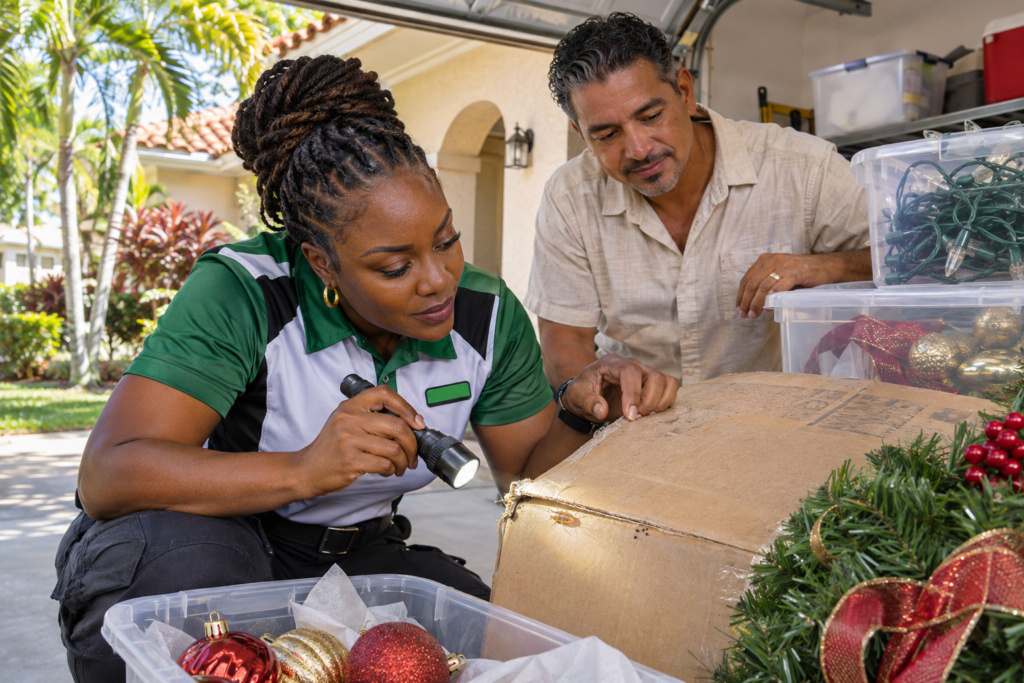
Holiday decorating can bring pests indoors, but the biggest risk is often not the Christmas tree. In South Florida, long-stored cardboard boxes, crowded garage shelves, and decorations that have been sitting in a warm attic can shelter cockroaches, silverfish, spiders, and even signs of rodents. A fresh-cut tree can carry small outdoor insects too, although most are harmless hitchhikers that cannot establish themselves in your home.
The safest approach is simple: inspect everything outside or in the garage, shake and check a real tree before it crosses the doorway, replace worn cardboard with sealed plastic bins, and pause if you find droppings, egg cases, gnawing, or live pests.
Can Christmas trees and decorations really bring pests inside?
Yes—but the type of item changes the risk. Real trees may carry aphids, mites, bark beetles, spiders, mantis egg cases, or other organisms that lived on the tree outdoors. Penn State Extension notes that most real Christmas trees are free of arthropods and that the occasional tree-associated hitchhiker generally does not threaten people, pets, furniture, or the structure.
Storage boxes are different. Corrugated cardboard creates protected seams where cockroaches can hide and breed. Paper, glue, fabric, and humid storage conditions can also support silverfish or booklice. In a garage, attic, shed, or storage room, rodents may shred paper, fabric, and artificial greenery for nesting material.
South Florida’s mild winters matter here. Garages and attics often stay warm enough for pest activity year-round, while humidity and brief leaks can make stored paper and cardboard even more attractive.
The three main holiday pest pathways
1. A fresh-cut tree can wake up outdoor hitchhikers
When a cut tree moves from outdoor conditions into a warm home, dormant insects or egg masses may become active. You might notice tiny insects near the tree, window, or lamp. That can be startling, but it usually is a temporary nuisance rather than a home infestation.
Before bringing the tree inside:
- Ask whether the seller uses a mechanical tree shaker.
- Give the trunk and branches a firm shake outdoors.
- Use a flashlight to check the trunk, branch joints, and underside of dense foliage.
- Remove bird nests, webs, obvious egg masses, and loose debris outdoors.
- Vacuum any stray hitchhikers that appear after setup.
Do not spray an aerosol insecticide on a Christmas tree. Products may be flammable or not labeled for that use, and chemical treatment is usually unnecessary. If activity is heavy or you cannot identify what you found, move the tree away from living areas and ask a pest professional for help.

2. Cardboard decoration boxes provide shelter
A box that looks quiet from the top may have protected corrugations underneath. UF/IFAS guidance specifically identifies corrugated cardboard as favorable cockroach harborage and recommends plastic bins for items stored longer than a few months. Silverfish also feed on starchy materials such as paper and adhesives, especially when humidity stays high.
Check seams, flaps, handles, and the bottom of each box for:
- Live or dead cockroaches
- Small dark spotting or smear marks
- Brown capsule-shaped cockroach egg cases
- Silvery shed skins or irregular feeding marks on paper
- Musty odors, damp cardboard, or visible mold
- Webbing, insect remains, or clusters of tiny insects
If you repeatedly find these clues, a targeted storage room pest inspection or garage pest-control service can identify the source rather than treating one box at a time.
3. Rodents use undisturbed holiday storage as nesting material
Rodents are attracted to quiet, sheltered areas and will gnaw cardboard, wiring, fabric, and plastic. Artificial wreaths, tree skirts, gift wrap, and soft decorations can become nesting material. Warning signs include capsule-shaped droppings, shredded paper, gnaw marks, oily rub marks, or a stale urine-like odor.
If you find droppings, do not sweep or vacuum them dry. CDC guidance says to ventilate the space, wear gloves, thoroughly wet the material with an appropriate disinfectant, allow the labeled contact time, and wipe it up. Heavily contaminated cardboard should be discarded. If signs continue after cleanup, arrange rodent exclusion so entry points are found and closed.
A 10-minute holiday unpacking inspection
Set up a simple inspection zone before decorations spread through the house. A garage doorway, covered patio, or bright utility area works well.
- Bring out one container at a time. Do not stack every box in the living room first.
- Check the storage shelf and floor. Look behind the box for droppings, egg cases, skins, webbing, or gnaw marks.
- Inspect the container exterior. Pay close attention to cardboard seams, lid rims, handles, and recessed wheels.
- Open it in good light. Use a flashlight and move slowly so a hiding pest does not disappear into nearby clutter.
- Shake washable textiles outdoors. Launder tree skirts, stockings, and fabric décor when their care labels allow.
- Wipe hard decorations. Clean plastic, glass, and metal items before they enter living areas.
- Transfer clean items. Use clear plastic bins with tight-fitting lids and label them by room.
- Flatten and remove empty cardboard. Do not leave old boxes piled beside the new bins.
If you see a single outdoor spider, vacuuming may be all that is needed. If you see German cockroaches, multiple egg cases, fresh droppings, or repeated activity, stop moving items between rooms. Our cockroach-control team can determine whether pests are confined to storage or already active elsewhere.
How to store decorations after the holidays
Choose sealed plastic over cardboard
Clear bins make inspection easier, resist humidity better than cardboard, and remove many of the tight corrugations cockroaches prefer. A tight lid also protects ornaments and fabrics from dust and moisture. Do not place food, candy canes, scented dough ornaments, birdseed crafts, or pet treats in decoration bins.
Keep containers off the floor and away from walls
Place bins on shelving where possible. A small inspection gap around the stack makes droppings, leaks, and pest activity easier to see. Avoid packing the area so tightly that no one can inspect behind it.
Fix moisture before it becomes a pest problem
Repair roof, plumbing, or garage-door leaks; dry wet materials promptly; and improve ventilation where condensation persists. Silverfish and booklice are strongly associated with moisture, while cockroaches also survive better when water is available. Learn more about local silverfish behavior in our South Florida pest guide.
Protect wiring and check it before reuse
Rodents may gnaw string-light wires while decorations are stored. Unplug each strand before inspection and discard damaged electrical items rather than taping over exposed conductors. Pest prevention and fire safety belong in the same unpacking routine.
When a holiday pest sighting needs professional help
Call for an inspection when you find more than an isolated tree hitchhiker, especially if you see:
- German cockroaches or multiple cockroach egg cases
- Fresh rodent droppings, gnawed wiring, or nesting material
- Pests appearing in several rooms after unpacking
- Repeated silverfish activity with damp or damaged paper
- Stinging insects or an unidentified egg mass or nest
- Activity inside walls, ceilings, HVAC chases, or inaccessible storage
A professional inspection should identify the pest, the source, and the conditions supporting it before treatment begins. That is more effective than spraying every decoration or placing pesticides where children and pets may encounter them. In Touch offers general pest control, targeted inspections, and rodent services for homes across Broward, Miami-Dade, and Palm Beach counties.
Frequently asked questions
Should I spray my Christmas tree for bugs?
No. Aerosol products may be flammable or not labeled for indoor tree use. Shake and inspect the tree outdoors, vacuum isolated insects, and ask a professional if activity is heavy or the pest is unknown.
Are bugs from a real Christmas tree dangerous?
Most tree-associated arthropods are harmless outdoor species that cannot survive or reproduce for long indoors. They generally do not infest furniture or structural wood. The practical response is inspection, mechanical removal, and vacuuming—not panic.
Are plastic bins completely pest-proof?
No container is perfect, but sturdy bins with tight lids remove cardboard harborage and make inspection easier. Keep the exterior clean, store bins off the floor, and correct moisture or rodent entry points around the storage area.
What should I do if I find rodent droppings in a decoration box?
Do not sweep or vacuum dry droppings. Move the container to a ventilated area, wear gloves, wet contaminated material with an appropriate disinfectant, follow the label contact time, and wipe it up. Discard contaminated cardboard. For extensive contamination or inaccessible nesting, contact a professional.
Can artificial trees carry pests too?
Yes. The tree itself is not growing outdoors, but its storage box, fabric bag, hollow stand, and folded branches can provide shelter. Inspect the base, branch hinges, cord, and storage container before assembly.
Schedule holiday pest protection with In Touch
Holiday decorating should make your home feel welcoming—not give pests a quiet ride inside. If you find cockroaches, silverfish, rodent signs, or unexplained activity while unpacking, contact In Touch Pest Control. Our local team can inspect the storage area, identify the pest, recommend the smallest effective treatment, and help prevent the same surprise next season.