

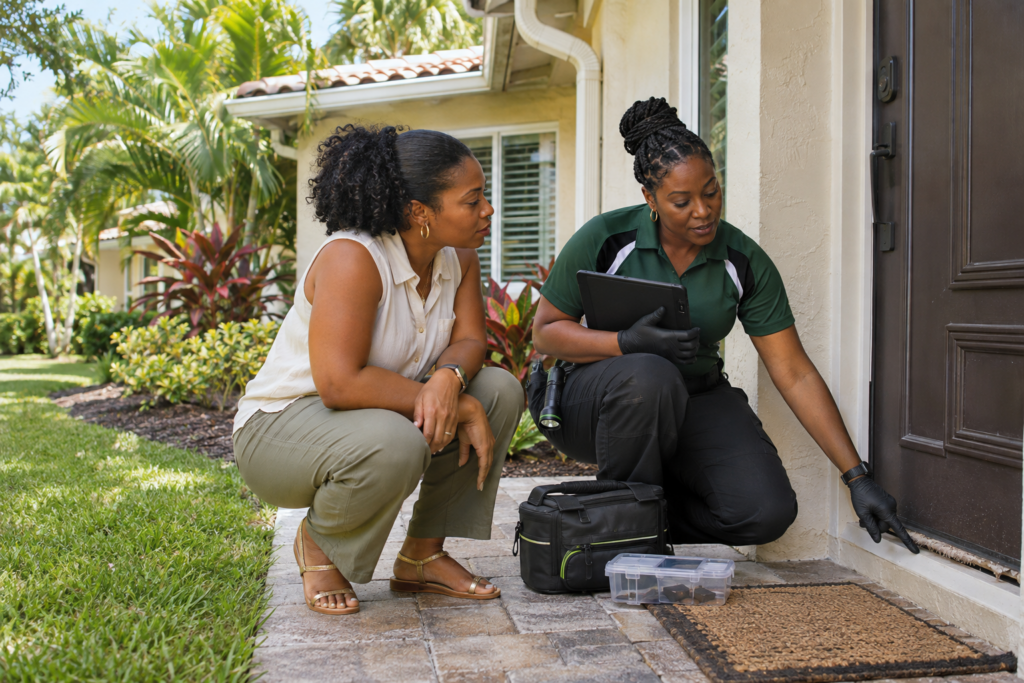
December can make a South Florida home look busier than usual: groceries arrive in bulk, guests come and go, decorations move through the garage, and travel bags return from hotels or family visits. Those changes create more food, cardboard, open doors, and hidden storage—exactly the conditions that let a small pest problem grow unnoticed.
The short answer: use the end of the year to remove pest food, water, shelter, and entry points. Inspect door sweeps and utility gaps, deep-clean the kitchen and pantry, move seasonal items into sealed bins, correct leaks and standing water, check the attic and garage for rodent evidence, and review your pest-control plan before January. In South Florida, pest prevention does not stop for winter because mild weather keeps many insects and rodents active.
Why a December pest-control reset matters in South Florida
December is usually cooler and drier than the peak rainy season, but it is not a pest-free month. National Weather Service climate records show that South Florida winters remain mild, and homes still offer steady food, water, and shelter. Roof rats can use trees and rooflines to reach attics. Cockroaches can remain active around kitchens, bathrooms, appliances, and plumbing. Ants may follow moisture or food indoors, while mosquitoes can develop in water left in containers after irrigation or a passing shower.
A year-end review works best as integrated pest management, or IPM: inspect first, identify the pest or condition, remove what attracts it, block access, monitor results, and use targeted treatment only when needed. That approach is more useful than spraying every visible surface on a calendar.
Your December year-end pest-control checklist
1. Walk the outside and seal obvious entry points
Start at the front door and work around the house in one direction. Look for daylight beneath doors, torn screens, loose weather stripping, open weep or vent areas that should be screened, cracks around pipes and cables, and gaps where roof edges, soffits, or siding meet. Check garage-door corners and the line where the wall meets the slab. A practical rule from UF/IFAS is that if you can see light through a gap from indoors, the opening may be large enough for common Florida pests.
Use materials suited to the opening instead of relying on foam alone for a possible rodent entry. Replace damaged door sweeps, repair screens, and ask a professional how to close roofline or utility gaps safely. Our entry-point sealing and perimeter pest defense pages show how exclusion fits into a broader plan.
2. Reset the kitchen and pantry after holiday cooking
Pull out what you can safely move and clean crumbs, grease, and spills from beneath the stove, refrigerator, toaster, coffee station, and small appliances. Empty the toaster tray, wipe cabinet hinges and shelf corners, and inspect dry goods for webbing, small beetles, damaged packaging, or unusual clumping. Transfer opened flour, cereal, rice, pet food, and baking ingredients into sealed containers.
Do not forget recycling, trash, and pet feeding areas. Use tight-fitting lids, rinse sticky containers, remove garbage regularly, and avoid leaving pet food or water out overnight when practical. If activity centers on cabinets or appliances, review kitchen pest control or our guide to roaches in kitchen cabinets.
3. Improve garage, attic, and seasonal storage
Cardboard is easy to stack and easy for pests to hide around. As decorations come down, inspect boxes before they return to storage. Shake out wreaths or fabric outdoors, discard damaged cardboard, and place clean decorations, linens, and keepsakes in sturdy lidded plastic bins. Raise storage off the floor where possible and leave enough space beside walls for cleaning and inspection.
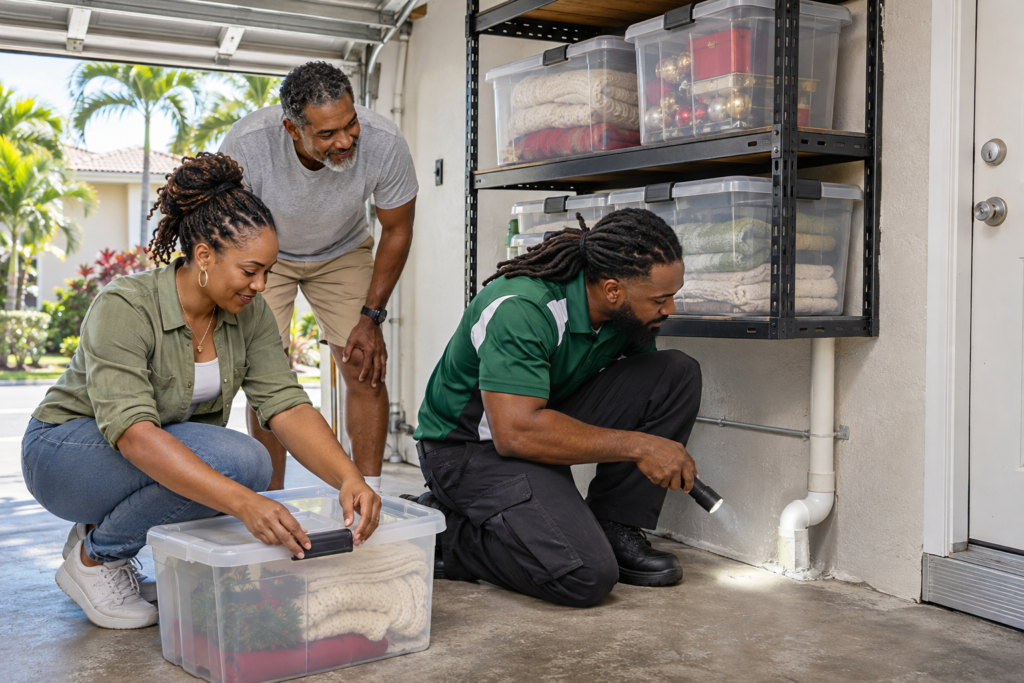
In the attic, garage, or utility room, look for droppings, gnaw marks, shredded nesting material, rub marks, insect egg cases, water stains, and new odors. Check around the water heater, air-conditioning lines, laundry hookups, and stored pet food. Explore our garage pest control and mice-in-the-garage resources if you find evidence.
4. Remove water and moisture indoors
Roaches, ants, drain flies, and other pests benefit from dependable moisture. Check beneath every sink for slow drips, inspect supply lines and refrigerator pans, clear sink strainers, and dry the cabinet base after a leak. Look for condensation around air-conditioning equipment and plumbing penetrations. A stain, soft cabinet panel, or musty odor deserves attention even if you do not see an insect.
Correct the source instead of masking it with fragrance or pesticide. Keep rarely used drains maintained according to the fixture or plumbing professional’s guidance, and avoid pouring pesticide into a drain unless the product label specifically permits that use.
5. Drain standing water and tidy the yard
Walk the yard after irrigation or rain. Empty water from plant saucers, buckets, tarps, toys, wheelbarrows, and other containers. Clean gutters, refresh birdbath water at least weekly, and check boat or equipment covers for pockets that hold water. UF/IFAS emphasizes that mosquito eggs need water to hatch, so container checks still matter during South Florida’s drier season.
Trim branches and dense vegetation away from the roof and exterior walls when it can be done safely. Remove fallen fruit, spilled birdseed, leaf piles, and yard debris that can feed or shelter pests. Keep trash lids closed and clean residue around cans. For a focused outdoor plan, see how to reduce mosquitoes in your yard.
6. Check for rodent and cockroach warning signs
- Fresh droppings in a pantry, garage, attic, cabinet, or beneath an appliance
- Gnawed food packages, insulation, wiring, door edges, or stored items
- Scratching after dark, especially above ceilings or inside walls
- Cockroach egg cases, shed skins, pepper-like specks, or a persistent musty odor
- Repeated daytime sightings or insects appearing in several rooms
If you find rodent droppings, do not sweep or vacuum them dry. CDC guidance says to wear rubber or plastic gloves, thoroughly wet droppings and urine with a disinfectant, allow the label-specified contact time, wipe them up with paper towels, and disinfect the area. Heavy contamination or activity in inaccessible spaces should be handled with professional guidance. Learn more about South Florida rodent control and roof-rat warning signs.
7. Inspect what came home with you
Before putting away travel bags, gifts, grocery cases, or secondhand items, inspect seams, folds, carton bottoms, and damaged packaging. Unpack luggage away from the bed when possible, launder travel clothing appropriately, and vacuum the suitcase before storage. A quick inspection is especially useful after hotel stays or when boxes have sat in a garage, warehouse, or vehicle.
8. Review your pest-control records and January priorities
Write down where you saw pests, what conditions were corrected, and what still needs repair. Check the last service report for recommendations that were postponed. Make a short January list rather than relying on memory: replace the back-door sweep, repair the screen, clear the gutter, inspect the attic, or schedule follow-up monitoring.
If activity keeps returning, identification is uncertain, or rodents, bed bugs, termites, or German cockroaches are suspected, arrange an inspection. Florida structural pest-control businesses must be licensed by the Florida Department of Agriculture and Consumer Services and operate under a certified operator in the relevant category. A useful inspection should explain the evidence, contributing conditions, treatment options, and follow-up—not simply quote a house-size spray.
A 30-minute year-end pest check
- Five minutes: check exterior doors, screens, and the garage threshold.
- Five minutes: inspect beneath sinks and around plumbing for drips or moisture.
- Five minutes: scan pantry shelves, pet food, trash, and recycling.
- Five minutes: inspect garage and seasonal storage for droppings, gnawing, or insects.
- Five minutes: empty outdoor containers and check gutters, plant saucers, and tarps.
- Five minutes: record findings, take photos, and assign repairs or professional follow-up.
Frequently asked questions
Do pests go away in South Florida during December?
No. Activity and species pressure can change with cooler or drier weather, but South Florida remains mild and homes provide reliable food, water, and shelter. Roaches, ants, rodents, mosquitoes, and stored-food pests can still require prevention or treatment.
Should I spray the whole house as a year-end precaution?
Not automatically. Start with inspection, sanitation, moisture correction, exclusion, and monitoring. If a pesticide is needed, identify the pest first and follow the product label exactly. Targeted professional treatment may be safer and more effective than broad, repeated spraying.
What should I do if I find fresh rodent droppings?
Keep people and pets away, do not sweep or vacuum the droppings dry, and follow CDC wet-cleaning and disinfection guidance. Document the location and arrange an inspection if droppings are fresh, widespread, recurring, or located in an attic, duct, wall, or other hard-to-clean space.
Can I seal a hole while rodents may still be inside?
Get the activity assessed first. Closing every opening without a removal plan can trap an animal inside or cause it to create a new route. A rodent-control plan should coordinate trapping or removal, monitoring, sanitation, and durable exclusion.
How often should a South Florida home be inspected for pests?
There is no single schedule for every property. Pest history, construction, vegetation, moisture, pets, storage, nearby water, and household needs all matter. Homeowners can do quick monthly checks and after storms, travel, or major storage changes; a professional can recommend monitoring and service frequency after inspecting the property.
Start the new year with fewer pest surprises
A practical year-end inspection turns vague worry into a short, useful action list. If you find recurring activity or want a trained set of eyes on the roofline, kitchen, garage, attic, and exterior, In Touch Pest Control can build a South Florida plan around your home and the evidence on site.
Sources and further reading
- UF/IFAS Extension: Homeowner’s Guide to Selecting a Pest Control Service
- U.S. EPA: Smart Pest Control to Protect Your Health
- UF/IFAS Extension: Mosquitoes and Their Control
- CDC: How to Clean Up After Rodents
- National Weather Service Miami: South Florida Climate
- Florida Department of Agriculture and Consumer Services: Pest Control Licensing and Certification