

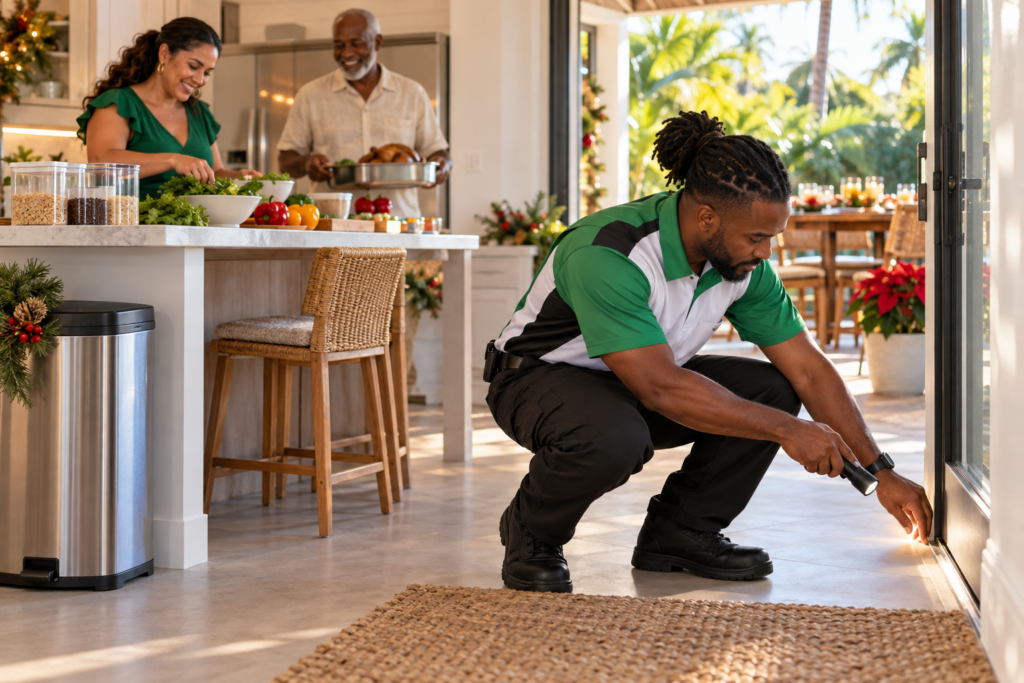
The holidays do not create rodents—but they can quietly give rats and mice exactly what they need: more food, more hiding places, and more chances to slip inside. In South Florida, where roof rats and house mice stay active year-round, a small problem can become much more noticeable once kitchens get busier, decorations come out of storage, and trash builds up between pickups.
The short answer: holiday rodent activity often seems worse because homes and businesses offer more accessible food, cardboard, clutter, open doors, and sheltered nesting spots. Cooler nights may also encourage rodents to use protected indoor spaces, but South Florida rodents are not simply “winter pests.” The best response is to remove food and water, inspect storage areas, seal entry points, and act on fresh signs before guests or holiday closures make the problem harder to track.
Why the holiday season changes the rodent equation
Rats and mice move in response to food, water, shelter, and access. UF/IFAS notes that rodent movement is usually related to food, while the U.S. Environmental Protection Agency recommends removing food and water sources, reducing nesting sites, and sealing holes. Holiday routines can increase several of those opportunities at once.
This does not mean every rustle in December is a new infestation. A roof rat may already be traveling through palms, fences, attics, or rooflines near a home. Holiday changes can simply make established activity easier to notice—or give a scouting rodent a reason to stay. Review our South Florida rodent guide for local species and signs.
1. More food is handled and stored
Baking supplies, fruit, bread, pet treats, bulk ingredients, gift baskets, and leftovers may spend more time on counters or in thin packaging. Crumbs collect under appliances and serving stations. Outdoor gatherings can leave grease, spills, or food scraps near patios and grills. Even a well-kept home can develop a few reliable feeding spots during a busy week.
2. Trash and recycling volumes rise
Overflowing cans, loose bags, food-smeared containers, and missed pickup timing can turn a service area into an easy food source. Commercial kitchens, offices, condos, and restaurants may face the same pressure at dumpsters and loading areas. Tight-fitting lids, clean enclosures, and prompt spill cleanup matter more than decorative scent deterrents.
3. Decorations and deliveries create cover
Cardboard boxes, gift wrap, tissue paper, fabric, and stored decorations can provide nesting material or conceal droppings and gnaw marks. Bringing bins down from an attic, garage, or storage unit may reveal activity that began earlier. Delivery boxes should be opened, checked, and recycled instead of becoming a long-term stack beside a pantry or garage wall.

4. Doors open more often
Guests, catering, deliveries, and repeated trips to the patio or garage can keep exterior doors open longer. A damaged door sweep or gap at a garage corner can become an entry route. Roof rats are strong climbers, so the inspection should also include soffits, vents, roof intersections, and branches touching the structure—not only the ground-level foundation.
5. Travel and schedule changes delay detection
When a household travels or a business closes for several days, kitchens and storage rooms become quieter. A small leak, pet-food bag, fruit bowl, or forgotten trash can support activity while nobody is watching. At the same time, normal staff or family routines that would catch fresh droppings or a chewed package are interrupted.
Why South Florida is different
In colder parts of the country, rodent stories often focus on freezing weather. South Florida needs a more accurate explanation. Roof rats, Norway rats, and house mice can remain active throughout our mild winter. Roof rats are especially comfortable in attics, roof spaces, palms, and ornamental vegetation. Shorter days and cooler nights may make a protected structure attractive, but food, water, access, landscaping, and existing harborage are usually the more useful factors to correct.
If you are seeing nighttime movement, attic noise, droppings, or chewed packaging, compare the signs in our guides to roof rats and house mice. Our earlier article on what attracts rats to South Florida homes also covers year-round yard and food sources.
Seven warning signs to check before guests arrive
- Fresh droppings in cabinets, the pantry, garage corners, attic access areas, or behind appliances.
- Chewed packaging around rice, flour, cereal, pet food, bird seed, or holiday treats.
- Scratching or movement sounds after dark in ceilings, walls, soffits, or storage areas.
- Greasy rub marks or repeated travel paths along walls, pipes, rafters, and fence lines.
- Shredded paper, fabric, or plant material collected in a protected corner.
- Gnaw marks on boxes, plastic containers, wood, weatherstripping, or wiring.
- New gaps or damaged screens around doors, vents, utility penetrations, roof edges, or garage seals.
A single sign deserves investigation; several fresh signs close together may indicate active travel or nesting. Our rodent early-warning checklist explains how to distinguish current evidence from older debris.
A practical holiday rodent-prevention checklist
In the kitchen and pantry
- Move vulnerable dry goods and pet food into durable containers with tight lids.
- Wipe counters, sweep under serving areas, and clean grease or crumbs beneath appliances.
- Refrigerate leftovers promptly and do not leave pet food or water out overnight.
- Inspect lower cabinets, the sink base, and pipe openings for droppings, leaks, or gaps.
In garages, attics, and storage rooms
- Replace damaged cardboard storage with lidded plastic bins where practical.
- Keep boxes organized so edges, walls, and floors can be inspected.
- Check decorations outdoors or in a bright hard-surface area before moving them into living spaces.
- Look around garage-door corners, attic hatches, vents, and utility lines for entry gaps.
Around the exterior
- Close trash and recycling lids fully and clean spills around cans or dumpster pads.
- Pick up fallen fruit and avoid leaving grill grease or party food outside overnight.
- Trim branches away from the roof and reduce dense cover touching the structure.
- Repair door sweeps, vent screens, soffits, and roofline gaps with rodent-resistant materials.
For a room-by-room exclusion plan, use our guide to sealing your home against rats and mice or learn about professional rodent exclusion.
What not to do when you find rodent evidence
- Do not sweep or vacuum dry droppings. CDC guidance says to wet rodent urine and droppings thoroughly with disinfectant, allow the product’s stated contact time, and wipe them up while wearing gloves.
- Do not scatter poison where children, pets, wildlife, or food can be exposed. Pesticides must be used exactly according to the label.
- Do not seal an active animal into a wall or attic without a plan. Confirm activity and coordinate trapping, removal, and exclusion in the right order.
- Do not rely on scent repellents alone. Food removal, sanitation, monitoring, and durable exclusion address the conditions that keep rodents present.
Heavy contamination, inaccessible attic areas, repeated sightings, damaged wiring, or uncertainty about the species are good reasons to stop and seek professional help. Florida structural pest-control businesses must be licensed by the Florida Department of Agriculture and Consumer Services for the categories in which they operate.
For restaurants, offices, condos, and holiday events
Commercial and multi-unit properties have more handoff points: loading docks, shared trash rooms, break rooms, catering deliveries, exterior doors, and neighboring suites. Assign one person to document evidence, keep food off the floor, rotate stock, flatten and remove cardboard, and check waste areas before long closures. A pest-control log helps distinguish a one-time sighting from a repeating route.
Apartment and condo residents should notify management early because shared walls, pipe chases, and utility penetrations can affect the inspection strategy. Business owners can review In Touch’s rodent-control service for inspection, monitoring, and prevention options.
Frequently asked questions
Do rats and mice come indoors only because it is colder?
No. In South Florida, rodents remain active year-round. Cooler nights can make sheltered spaces attractive, but food, water, access points, vegetation, clutter, and existing nesting areas are often more important than temperature alone.
Can holiday decoration boxes contain rodents?
A box stored in a garage, attic, shed, or storage unit can provide cover or nesting material. Inspect boxes for holes, staining, droppings, shredded material, and gnawing before carrying them through the home.
Should I put traps out before leaving for holiday travel?
Traps require correct placement, safe use, and timely checking. Do not leave a setup unattended for an extended trip if animals could remain trapped or if children and pets may reach it. Remove food sources, secure trash, correct leaks, and arrange monitoring or professional service when active signs are present.
Are peppermint oil or ultrasonic devices enough?
They should not replace inspection, sanitation, trapping where appropriate, and entry-point repair. A rodent with reliable access to food and shelter may tolerate a temporary odor or avoid a device by using another route.
When should I call a pest-control professional?
Call when signs are fresh or recurring, sounds come from walls or attics, wiring or food has been damaged, contamination is extensive, or you cannot find the entry route. Early inspection is especially helpful before guests arrive, before a business closes, or before sealing work begins.
Enjoy the holidays without sharing them with rodents
A clean counter is helpful, but the strongest holiday plan connects sanitation, storage, monitoring, and exclusion. If you find droppings, gnawing, attic noise, or a suspected entry point, In Touch Pest Control can inspect your South Florida home or business and build a practical rodent-control plan. Contact In Touch Pest Control before a small sign becomes a holiday disruption.