

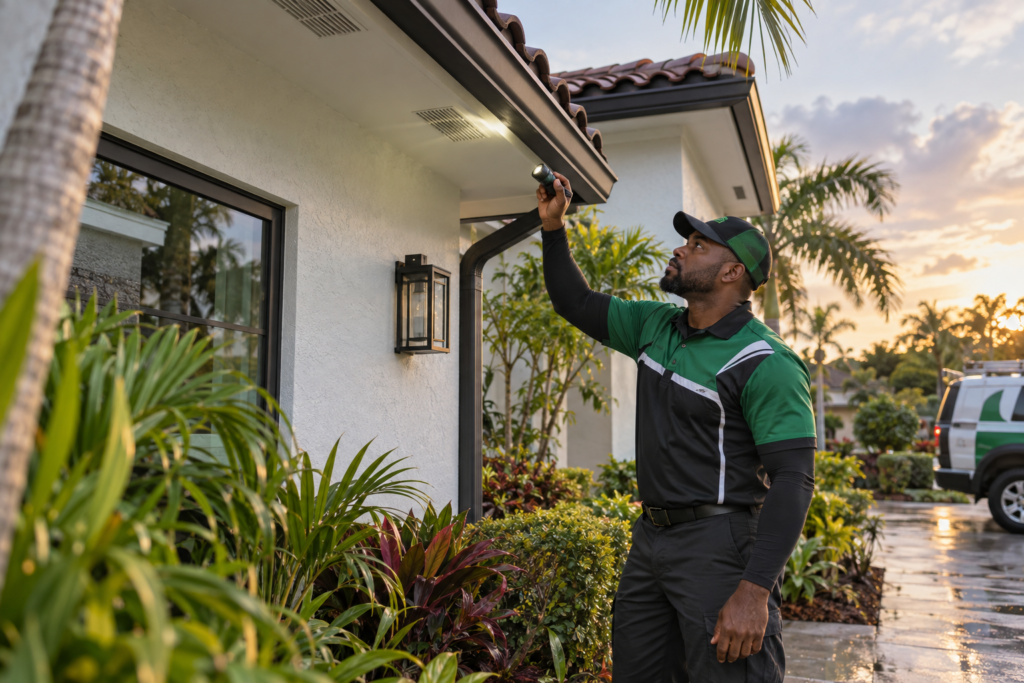
A faint scratching above the ceiling at night can be easy to blame on a palm frond. A torn bag of pet food may look like an accident. One dark dropping in a garage corner may seem too small to matter. In South Florida, those clues deserve a closer look—especially as October brings the final stretch of our wet season and households begin repairing storm wear, reorganizing garages, and spending more time outdoors.
The clearest early rodent warning signs are fresh droppings, nighttime scratching, new gnaw marks, greasy rub marks, shredded nesting material, damaged food or fruit, unusual pet attention, and a stale odor in hidden spaces. Finding one sign does not prove a large infestation, but repeated or fresh evidence means it is time to inspect the source, protect food, close access points, and arrange professional help before rodents settle into an attic or wall void.
Is October really “rodent season” in South Florida?
Rodents do not wait for cold weather here. Roof rats, Norway rats, and house mice can remain active throughout the year because our climate, landscaping, food waste, irrigation, and buildings provide what they need. October is better understood as a high-value inspection window, not a switch that suddenly turns rodent activity on.
Late wet-season rain can disturb outdoor shelter. Storms can loosen soffits, screens, roof returns, garage seals, and utility covers. Ripe or fallen fruit, birdseed, pet food, overflowing trash, dense vegetation, and standing water can keep rodents close to a structure. When a quiet roof rat finds a tree limb leading to the roof and a thumb-sized construction gap, the attic becomes attractive whether the night feels cool or tropical.
That is why an October check is worthwhile: you can find and correct small conditions before holiday storage, travel, and busier end-of-year schedules make the evidence easier to miss.
Eight early warning signs to check now
1. Fresh droppings in protected areas
Look along garage walls, behind stored goods, under sinks, near pet-food containers, inside pantry cabinets, around water heaters, and close to attic access points. Fresh rodent droppings tend to look darker and may appear shiny or soft; older droppings become duller and dry. Do not handle them bare-handed, and do not sweep or vacuum them before proper disinfection.
2. Scratching, scurrying, or gnawing after dark
Roof rats are skilled climbers and commonly use upper parts of buildings. Sounds in an attic, soffit, ceiling, or upper wall after the home quiets down can indicate travel or nesting. Note the time and exact area instead of pounding on the ceiling; a repeatable location gives an inspector a better starting point.
3. New gnaw marks or damaged packaging
Check cardboard, plastic food bags, pet-food bins, fruit, wiring covers, door edges, and soft building materials. Fresh gnawing may expose a lighter surface beneath weathered material. Chewed wiring is a property-safety concern, so switch off power to an affected circuit when appropriate and use a qualified electrician for repairs.
4. Greasy rub marks and repeated travel paths
Rats often travel close to walls, rafters, fences, pipes, and other edges. Repeated contact can leave dark smudges along an active route. Outdoors, look for narrow pathways beneath dense plants or along walls. A mark by itself can have another cause, so check for droppings, tracks, gnawing, or a nearby opening before drawing a conclusion.
5. Shredded nesting material
Shredded paper, insulation, fabric, dried plant material, or packing material gathered in a quiet corner can indicate a nest. Common locations include attics, stored holiday boxes, seldom-used cabinets, garage shelving, sheds, and the space behind appliances.
6. Damaged fruit, pet food, or birdseed
Roof rats readily feed on fruits, seeds, grains, pet food, and garbage. Inspect ripening citrus and other fruit, clean up fallen produce, and look for bite damage or food carried away. Bring pet food indoors overnight and clean spilled seed beneath feeders while you investigate activity.
7. Pets fixating on one wall, cabinet, or ceiling
A dog repeatedly sniffing one garage corner or a cat watching the same ceiling line may hear or smell movement you cannot detect. Pet behavior is not proof, but it can help narrow the inspection area—especially when paired with nighttime noise or droppings.
8. A stale or unexplained odor
Urine, nesting material, contaminated insulation, or a dead rodent can create an odor in a closed cabinet, wall void, attic, or HVAC area. If evidence suggests rodents entered ductwork, avoid disturbing the material and arrange professional removal and appropriate duct assessment.
Where South Florida homeowners should inspect first
- Roofline and attic: soffits, fascia joints, roof returns, vents, screens, attic hatches, and areas reached by overhanging branches.
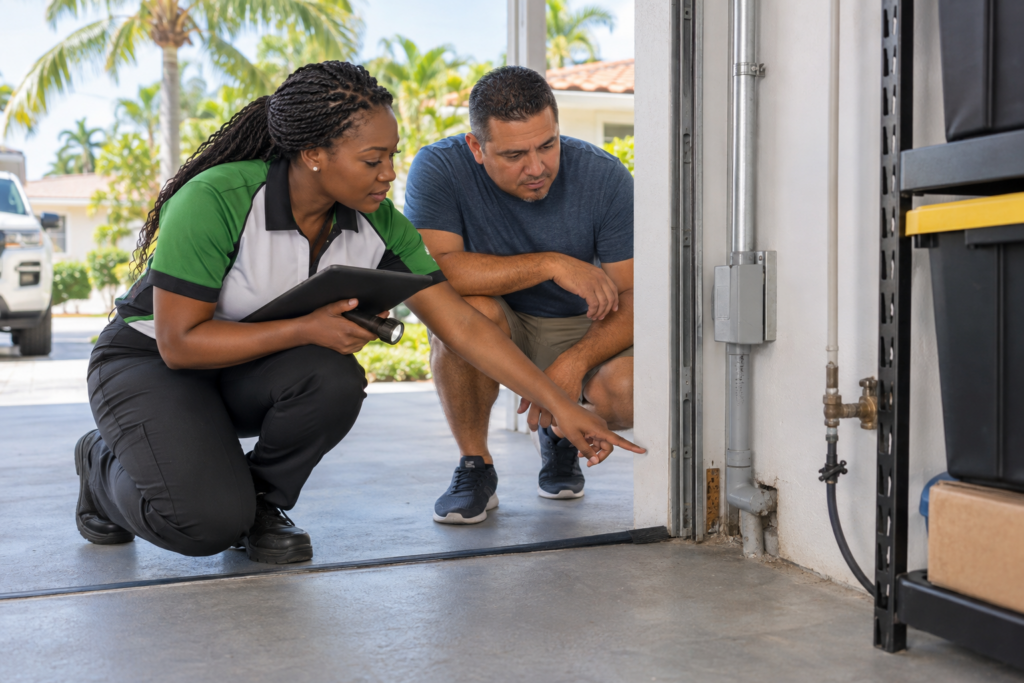
- Garage and utility room: door sweeps, corners behind storage, plumbing and electrical penetrations, water-heater areas, and pet-food storage.
- Kitchen and pantry: behind appliances, under sinks, near water lines, inside lower cabinets, and around stored dry goods.
- Exterior walls: air-conditioning lines, hose bibs, conduits, vents, screen enclosures, foundation joints, and damaged weatherstripping.
- Yard and waste areas: fruit trees, bird feeders, dense palms, wood piles, sheds, compost, recycling, and trash cans without secure lids.
Start high as well as low. Our roof rat guide explains why these agile rodents are often associated with trees and upper building levels, while the broader rodent guide helps compare common signs.
What to do during the first 24 hours
- Document the evidence. Photograph signs from a safe distance and record the room, height, time, and nearby food, water, or opening.
- Protect food. Move pantry staples and pet food into hard containers with tight lids. Discard food with damaged packaging or possible contamination.
- Remove easy resources. Close trash, pick up fallen fruit, stop leaving pet food outdoors, correct leaks, and clear clutter that hides activity.
- Keep people and pets away. Do not let children or animals investigate droppings, nests, traps, or bait.
- Arrange an inspection. A rodent professional can identify likely species, active routes, entry points, and the right order for trapping, sanitation, and exclusion.
Clean droppings safely—never sweep or vacuum them dry
The CDC advises against sweeping or vacuuming rodent urine, droppings, or nesting material because contaminated particles can become airborne. For a small cleanup, ventilate the space when appropriate, wear rubber or plastic gloves, thoroughly wet the material with an EPA-registered disinfectant or a bleach solution prepared according to current CDC instructions, wait the directed contact time, wipe it up with paper towels, and clean the hard surface. Wash gloved hands before removing gloves, then wash bare hands.
Heavy infestations, contaminated insulation, inaccessible attics, or evidence in HVAC ducts call for additional precautions and professional help. Do not enter a tight or unsafe attic simply to confirm a sound.
Why traps or bait alone may not solve the problem
Removing individual rodents without correcting access, food, water, and shelter leaves the same conditions available to the next animal. Sealing every visible gap too early can also trap rodents inside a structure. A complete plan coordinates population control with inspection, sanitation, repairs, monitoring, and properly timed exclusion.
Soft foam by itself is not a durable answer in rodent-prone openings because rodents can gnaw some foams, plastics, and wood. The right repair depends on the opening and building material and may include corrosion-resistant metal mesh, flashing, hardware cloth, mortar, or a properly fitted door sweep. See In Touch’s rodent exclusion service and rodent control approach for how inspection and correction work together.
A practical October rodent-prevention checklist
- Trim branches and palm fronds that touch or overhang the roof.
- Repair storm-damaged soffits, vent screens, fascia, and weatherstripping.
- Check garage and exterior doors for daylight at the bottom and corners.
- Seal gaps around plumbing, wiring, air-conditioning lines, and other penetrations with rodent-resistant materials appropriate to the opening.
- Harvest ripe fruit and remove fallen fruit promptly.
- Store pet food, birdseed, and dry goods in sturdy containers with tight lids.
- Keep trash and compost closed; clean residue from bins and pads.
- Fix leaks, avoid over-irrigation, and remove standing water.
- Move boxes and stored goods off the floor and away from walls where practical.
- Recheck quiet corners weekly for new evidence.
When to call a rodent-control professional
Call promptly when you find repeated fresh droppings, hear activity on multiple nights, see wiring damage, locate a nest, smell a persistent odor, or suspect rodents are in an attic, wall, or duct system. Professional assessment is also the safer choice when children, pets, tenants, food-service areas, or a commercial operation could be affected.
If the evidence points to the attic, learn what a focused visit may include on our roof rat attic solution page.
Frequently asked questions
Are rats only a winter problem in South Florida?
No. Rats can remain active year-round. October is a useful prevention checkpoint because late wet-season weather, storm-related openings, landscaping, and outdoor food sources can change the routes and shelter available around a property.
Does one dropping mean I have an infestation?
One dropping is not enough to measure the size or age of a problem. Treat it as evidence worth documenting and inspecting. Fresh or repeated droppings, sounds, gnawing, nesting material, or rub marks raise the urgency.
Can roof rats enter without a tree touching the house?
Yes. Roof rats are capable climbers and may use fences, vines, pipes, utility lines, rough walls, or nearby structures. Trimming roof access helps, but the building still needs a complete high-and-low entry-point inspection.
Should I seal a hole as soon as I find it?
Document it and get it assessed. During active indoor activity, sealing in the wrong order can trap rodents inside or redirect them deeper into the structure. Control and exclusion should be coordinated.
What is the fastest way to make my yard less attractive to rats?
Start with the easiest calories and cover: secure garbage, bring pet food in, clean birdseed, pick up fallen fruit, thin dense clutter near the structure, fix leaks, and trim roof access. Then inspect and repair building gaps.
Stop rodent activity before it becomes an attic problem
Hearing movement or finding signs around your South Florida home or business? In Touch Pest Control can inspect likely routes, identify conducive conditions, build a control plan, and coordinate rodent-resistant exclusion. Contact In Touch Pest Control to schedule an inspection before a small warning sign becomes a larger cleanup.