

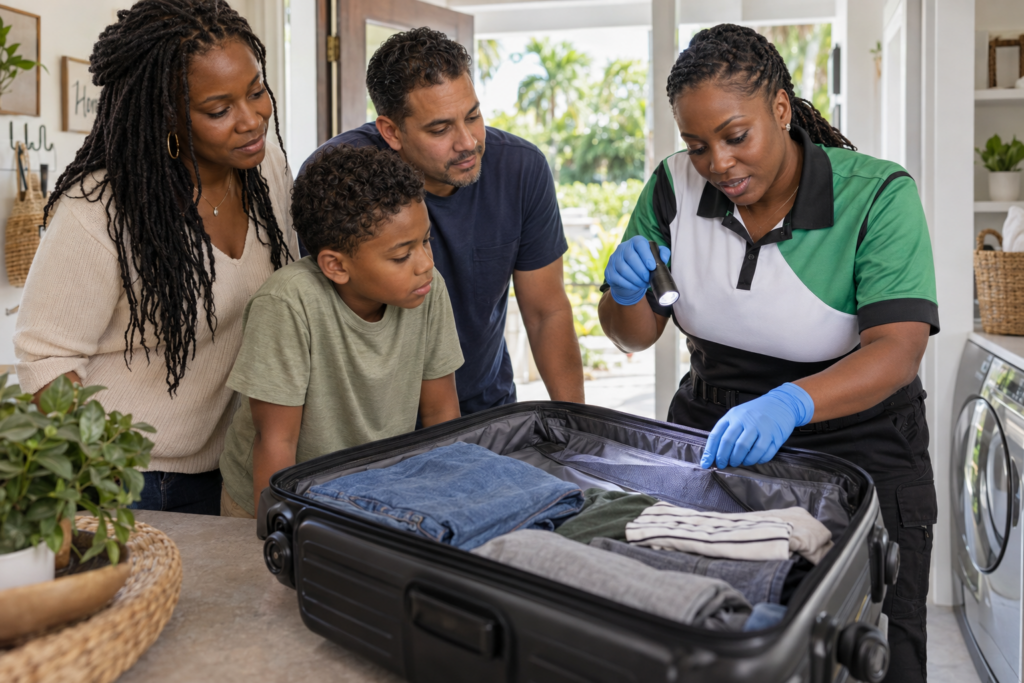
Holiday trips should end with photos, leftovers, and stories—not bed bugs hidden in a suitcase. Whether you are flying through Fort Lauderdale or Miami, taking a cruise, driving across Florida, or hosting relatives in South Florida, a few calm habits can sharply reduce the chance of bringing these hitchhikers home.
The short answer: inspect the sleeping area before unpacking, keep luggage closed and away from beds and floors, then unpack in a laundry or hard-surface area when you return. Dry washable clothing on the hottest setting the fabric can safely tolerate, inspect the suitcase seams, and act quickly if you find a bug, shed skin, egg, or dark spotting.
Why holiday travel creates bed bug opportunities
Bed bugs are excellent hitchhikers. They do not jump or fly, and they are not attracted to dirt. Instead, they move between places in the seams and folds of luggage, clothing, bedding, upholstered items, and other belongings. A spotless hotel, guest room, vacation rental, dorm, or cruise cabin can still receive them from an earlier visitor.
November adds more movement between households: Thanksgiving visits, family stays, weekend hotel trips, and luggage stored in shared vehicles. South Florida’s airports, cruise connections, hotels, condos, and multi-generational homes make practical prevention especially useful. The risk comes from movement of belongings—not from a traveler’s cleanliness, culture, or destination.
Bed bugs are small, flat, reddish-brown insects. UF/IFAS notes that adults are broadly flattened and that the pests can be transported on clothing, luggage, bedding, and furniture. The CDC reports that bed bugs have not been shown to transmit disease to people, although bites can cause itching, allergic reactions, loss of sleep, and stress. See our Bed Bugs guide for identification details.
Before you leave: pack for easier inspection
- Choose luggage in good repair, with seams and pockets you can inspect.
- Pack a small flashlight and a few sealable bags for laundry or suspect items.
- Keep clothing organized in washable packing cubes or bags instead of loose throughout the suitcase.
- Photograph valuable items and know which fabrics can safely tolerate a hot dryer.
- If your household has dealt with bed bugs before, check encasements and monitors before travel so an old problem is not confused with a new exposure.
You do not need to spray your suitcase “just in case.” Never apply a pesticide to luggage, clothing, bedding, or skin unless the product is specifically registered and labeled for that use, and always follow the label. The EPA warns against improvised remedies such as rubbing alcohol and unregistered gases because they can create fire, poisoning, or explosion hazards.
The first five minutes in a hotel or guest room
1. Park your bags away from the bed
Leave luggage closed in the tiled entry or bathroom while you inspect. Do not place a suitcase, backpack, coat, or purse on the bed, upholstered chair, carpet, or spare bedding. A bathtub may be a useful temporary spot if it is dry and clear of amenities.
2. Check the bed zone with a flashlight
Pull back the bedding without stripping the room. Look along mattress piping and seams, around tags, at the box spring edge, and in cracks around the headboard and nearby furniture. You are looking for live bugs, pale shed skins, tiny whitish eggs, or clusters of dark spotting. A single unexplained stain is not proof, but several signs in protected crevices deserve attention.
3. Inspect the luggage rack before using it
Check the rack’s straps, joints, screw holes, and underside. If it looks clear, place it away from the wall and bed, then keep your suitcase zipped when you are not using it. Avoid unpacking into drawers unless you have inspected them and truly need the space.

4. Speak up if you find credible evidence
Photograph the location, capture a specimen in a sealed container or bag if you can do so safely, and notify the host or front desk. Ask for another room that is not directly beside, above, or below the suspect room, or choose different lodging. Do not carry unpacked belongings through the property. Inspect the replacement room too.
Smart habits during your stay
- Keep luggage zipped and elevated on the inspected rack.
- Put worn clothing into a sealed bag instead of a pile on the floor.
- Keep coats, tote bags, and backpacks off beds and upholstered furniture.
- Do not bring discarded or curbside furniture into a vacation property or home.
- If bites appear, document them but look for physical pest evidence; skin marks alone cannot identify the cause.
- Before checkout, inspect the suitcase exterior, zipper track, pockets, handles, and wheels.
If you are hosting overnight guests, offer a clean luggage stand or hard-surface area. There is no need to embarrass or interrogate anyone. A neutral household routine—bags stay off beds, laundry stays contained, and guest areas are checked between visits—protects everyone.
When you get home to South Florida
Unpack outside the bedroom
Take luggage to a laundry room, garage work area, or another bright hard-surface space. Keep it off sofas and beds. Transfer washable clothing directly to the laundry process and keep untreated items contained until you can inspect or treat them.
Use dryer heat correctly
The EPA emphasizes that high dryer heat can kill bed bugs, while washing alone generally will not. Use the hottest dryer setting each fabric can safely tolerate and follow the appliance and garment instructions. FDACS notes that a high dryer cycle for 30 minutes is one effective heat option, but dense loads, delicate items, shoes, electronics, and luggage need a method appropriate to the item.
Inspect and store luggage deliberately
Use a flashlight to inspect seams, piping, pocket folds, handles, wheel wells, and the lining. Vacuuming visible bugs can help, but immediately seal and dispose of the vacuum contents outdoors. Store cleaned luggage away from sleeping areas—never under the bed. Our guides to bed bugs in luggage and bed bugs on clothing cover item-specific next steps.
What to do after a suspected exposure
- Contain first. Bag suspect clothing and small belongings; do not move the suitcase from room to room.
- Preserve evidence. Save a specimen or clear photo for identification when possible.
- Inspect sleeping and seating areas. Check mattress seams, bed frames, headboards, couch seams, and nearby cracks.
- Avoid foggers and random spraying. They may expose people and pets without reaching the hidden harborages.
- Call early. Professional identification can prevent weeks of treating the wrong pest or spreading belongings through the home.
In apartments and condos, notify property management promptly because adjoining units and shared walls may affect inspection strategy. Do not discard mattresses or furniture into a hallway. Review our After-Travel Bed Bug guide, Bedroom Bed Bug guide, or Apartment & Condo Pest Control page for the setting that fits your concern.
Frequently asked questions
Can you see bed bugs in a hotel room?
Adults are visible, but young bed bugs and eggs are much smaller and easy to miss. Look for a combination of signs in protected seams and cracks rather than expecting a bug to sit in the open.
Do bed bugs mean a hotel or home is dirty?
No. Bed bugs feed on blood, not crumbs or grime. Sanitation can make inspection and control easier by reducing hiding places, but any occupied property can receive a hitchhiking bed bug.
Should I throw away my suitcase after a trip?
Usually not. Keep it contained, inspect it carefully, and use a suitable treatment method if evidence is found. Throwing an unwrapped suitcase into a shared hallway or curb area can spread the problem.
Can bed bug bites prove I brought them home?
No. Bite reactions vary, may appear later, and can resemble other skin conditions. Physical evidence and professional identification are more reliable. Seek medical advice for a severe reaction or signs of infection.
When should I call a pest-control professional?
Call when you find a suspected specimen or multiple signs, repeatedly wake with unexplained bites plus physical evidence, or need help treating luggage, bedrooms, couches, or a multi-unit property. FDACS recommends hiring a licensed pest-control company for an established bed bug problem.
Bring home the memories—not the bed bugs
A quick room check, careful luggage placement, and a return-home laundry routine take only minutes and can prevent a much larger disruption. If you find signs after November travel, In Touch Pest Control can inspect the affected areas, identify the pest, and recommend a treatment plan for your South Florida home, condo, rental, or hospitality property. Contact In Touch Pest Control for help before the problem travels farther.