

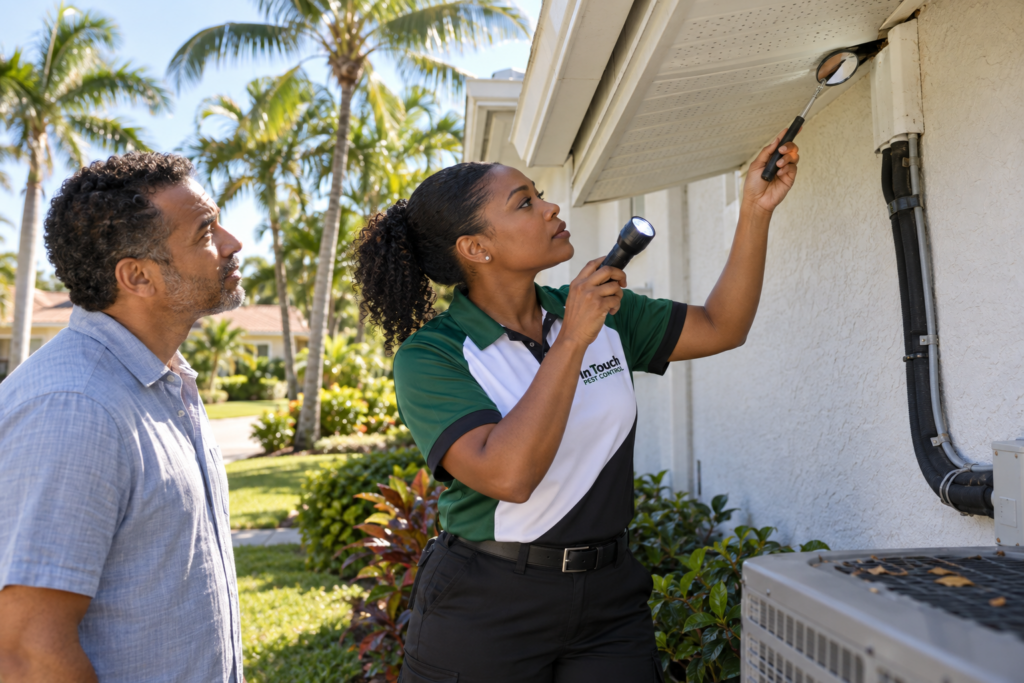
A gap no wider than a pencil can turn a South Florida home into shelter for a mouse. A loose soffit corner, worn garage sweep, or opening around an air-conditioning line can give a climbing roof rat the route it needs. Because those defects often look harmless from the driveway, sealing a home successfully starts with a deliberate inspection—not a can of foam and a quick patch.
To seal your home against rats and mice, inspect the structure from the roofline down, close every opening ¼ inch or larger with gnaw-resistant materials, repair doors and vents, trim access from trees and vines, and remove nearby food and water. If rodents may already be inside, coordinate trapping and exclusion before closing the final exits so you do not trap animals in an attic or wall.
Why a ¼-inch gap matters
The CDC reports that mice can fit through a hole about ¼ inch wide—the width of a pencil. UF/IFAS notes that rats can squeeze through cracks about ½ inch wide. Those measurements make small construction gaps important, especially where soft material gives rodents room to gnaw the opening larger.
In South Florida, the inspection must include upper levels. Roof rats are strong climbers and commonly use trees, fences, pipes, vines, utility routes, soffits, and roof edges. Our warm climate also means prevention is a year-round job, not something to save for a cold snap.
Before sealing: check whether rodents are already inside
Do not permanently close every suspected opening the moment you discover it. First look for fresh droppings, greasy rub marks, gnawing, nesting material, nighttime scratching, damaged food, or a persistent odor. Mark likely openings and note where the evidence appears.
If signs are active, a professional plan should coordinate removal with repairs. Sealing too early can confine rodents inside, push them into new wall or ceiling spaces, or leave young behind. If you find droppings, follow current CDC cleanup guidance: do not sweep or vacuum them dry, because that can put contaminated particles into the air.
Inspect your home from the roofline down
1. Roof edges, soffits, fascia, and attic vents
Walk the property in daylight and use binoculars or a camera zoom rather than climbing unsafely. Look for lifted soffit panels, rotted fascia, uncapped roof returns, damaged vent screens, gaps where rooflines meet, and staining or rub marks near openings. From inside the attic, daylight showing through a joint deserves attention—but avoid entering a hot, tight, or contaminated attic without the right safety equipment.
2. Branches, palms, vines, fences, and utility routes
Trim branches and palm fronds away from the roof and walls. Cut back vines that hide cracks or create a climbing path. Check where fences, screen-enclosure framing, conduits, or cable lines approach the structure. Trimming access helps, but it does not replace sealing the building itself.
3. Exterior doors and the garage
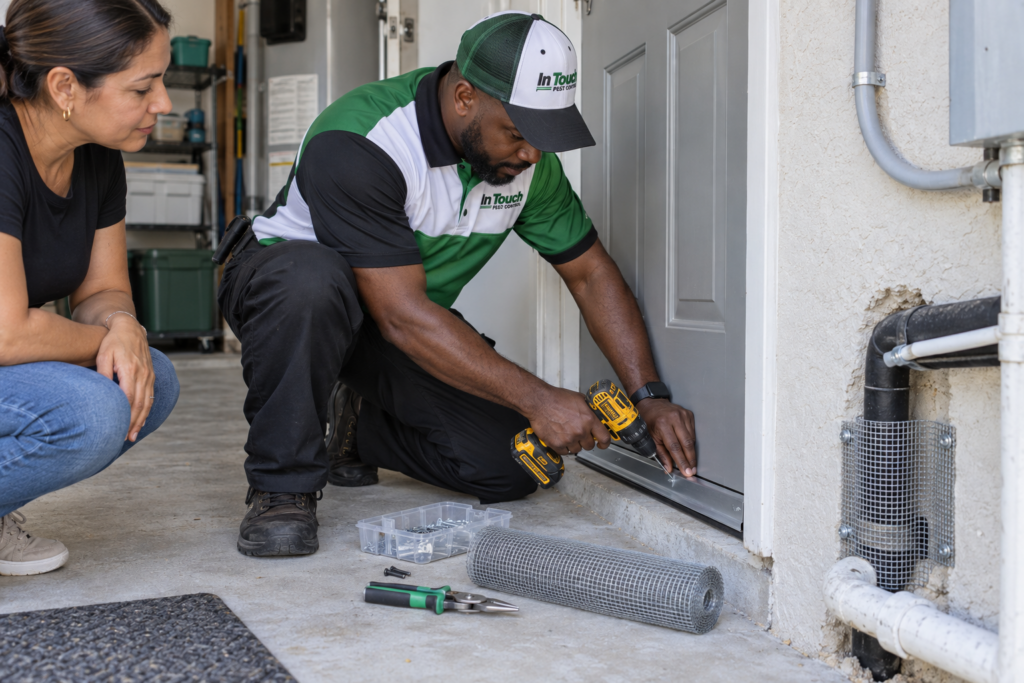
Close each exterior door and look for daylight at the bottom and corners. Replace worn sweeps, adjust thresholds, repair weatherstripping, and make sure the garage door closes evenly across the slab. Side-door frames, garage corners, and tracks often deserve a closer look. For a room-by-room example, see our guide to getting mice out of the garage.
4. Pipes, wiring, air-conditioning lines, and vents
Inspect every place a service enters the wall: refrigerant lines, condensate drains, plumbing, cable, electrical conduit, hose bibs, dryer vents, exhaust vents, and irrigation controls. Check both the exterior opening and the matching interior cabinet, utility room, or appliance connection.
5. Foundation joints, exterior cladding, and attached structures
Look where stucco, siding, masonry, slabs, screen rooms, patios, sheds, and additions meet. Cracks, missing mortar, warped panels, and hollow decorative features can create concealed routes. Keep stored items far enough from walls to see new signs during future checks.
Use materials rodents cannot easily defeat
The correct repair depends on the gap, its location, exposure to weather, and the surrounding construction. UF/IFAS lists rodent-resistant choices including 26-gauge-or-heavier sheet metal, 24-gauge-or-heavier perforated metal with openings no larger than ¼ inch, and 19-gauge-or-heavier hardware cloth with openings no larger than ¼ inch.
- Small cracks and irregular gaps: pack with corrosion-resistant metal mesh or steel wool where appropriate, then secure it with exterior-grade sealant so it cannot be pulled or pushed out.
- Larger holes: use properly fastened hardware cloth, sheet metal, flashing, cement, mortar, or another durable building repair suited to the surface.
- Doors: install a tight-fitting metal-reinforced sweep and correct the threshold or frame so the gap is under ¼ inch.
- Vents: repair the vent and add securely fastened corrosion-resistant screening without blocking required airflow or violating equipment specifications.
- Utility penetrations: fit mesh or metal closely around the pipe or conduit, fasten it, then weather-seal the joint.
Expanding foam or caulk alone is not a dependable rodent barrier. Soft materials can be gnawed or displaced. Foam can help weather-seal around a metal barrier, but the gnaw-resistant component should do the exclusion work.
A practical room-by-room sealing checklist
Kitchen and pantry
- Inspect under sinks and behind the refrigerator, dishwasher, and stove.
- Seal gaps around supply lines, drainpipes, outlets, and cabinet backs.
- Store rice, flour, cereal, snacks, and pet food in sturdy containers with tight lids.
- Discard food with gnawing, holes, droppings, or possible contamination.
If the evidence is concentrated around cupboards, review how to address mice in kitchen cabinets.
Laundry and utility areas
- Check washing-machine hoses, dryer exhausts, water-heater pipes, drain lines, and electrical penetrations.
- Repair leaks and condensate problems that provide water.
- Keep cardboard, paper, and fabric off the floor and away from walls.
Attic and upper walls
- Inspect attic vents, eaves, soffit transitions, pipe stacks, cable entries, and the attic hatch.
- Do not cover required ventilation; use the correct screen and fastening method.
- Have damaged wiring, ducts, or insulation evaluated by the appropriate professional.
For signs overhead, visit our roof-rat attic solution page.
Garage, shed, and outdoor storage
- Make the garage-door seal continuous and close side-door gaps.
- Move birdseed, grass seed, and pet food into hard, lidded containers.
- Raise stored goods and leave inspection space along walls.
- Repair shed corners, skirting, vents, and door edges.
Make the yard part of your rodent barrier
A sealed structure works best when the area around it offers less food, water, and cover. Pick up fallen mangoes, citrus, avocado, and other fruit. Clean spilled birdseed. Bring pet food and bowls in at night. Use tight trash lids, clean greasy grills, secure compost, fix irrigation leaks, and thin dense vegetation beside the house.
UF/IFAS also recommends removing branches that touch roofs or exterior walls because rodents and other pests use them as access routes. Recheck vegetation after storms and fast summer growth.
What exclusion can—and cannot—do
Exclusion prevents new entry and is one of the most durable parts of rodent management. It does not remove animals already inside, clean contaminated insulation, repair chewed wiring, or eliminate outdoor food pressure. A complete plan combines inspection, sanitation, population control, structural repair, and follow-up monitoring.
See In Touch’s rodent exclusion service and rodent control service for the difference between closing routes and addressing current activity. You can also compare signs in our House Mice and Rodents guides.
When to call a professional
- You hear or see activity inside the attic, walls, cabinets, or HVAC area.
- Droppings or gnaw marks return after cleanup.
- The likely opening is on a high roofline or near electrical equipment.
- There is extensive contamination, damaged insulation, or a persistent odor.
- You manage a multi-family, food-service, childcare, or other sensitive property.
- You need help distinguishing rodents from squirrels or other wildlife before repairs begin.
Frequently asked questions
What size hole should I seal to keep mice out?
Seal openings ¼ inch and larger. A practical rule from the CDC is that if a pencil can fit through the opening, a mouse may be able to use it. Inspect smaller cracks too if the surrounding material is soft or damaged.
Can I use spray foam to keep rats out?
Not by itself. Rodents can gnaw soft foam. Use a securely fastened gnaw-resistant barrier such as suitable metal mesh, hardware cloth, flashing, or masonry, then use sealant or foam only as part of a properly finished, weather-resistant repair.
Should I seal an entry hole if I hear rats in the attic?
Have the activity assessed before closing the final active route. Trapping, removal, and exclusion need to be timed so rodents are not confined inside the structure.
How often should I inspect my South Florida home?
Check at least seasonally and after hurricanes, severe thunderstorms, roofing work, utility installation, tree trimming, or any repair that changes the exterior. Also reinspect fast-growing branches and palms during the wet season.
Will sealing rodent gaps also help with other pests?
Often, yes. Closing doors, cracks, vents, and utility gaps can also reduce access for large cockroaches, ants, snakes, and other pests. The repair still needs to preserve drainage, ventilation, and equipment clearances.
Build a stronger barrier before the next rodent gets in
Not sure which opening is active—or what material belongs there? In Touch Pest Control can inspect your South Florida home, identify likely rodent routes, coordinate control, and recommend durable exclusion repairs. Contact In Touch Pest Control to schedule a rodent inspection.