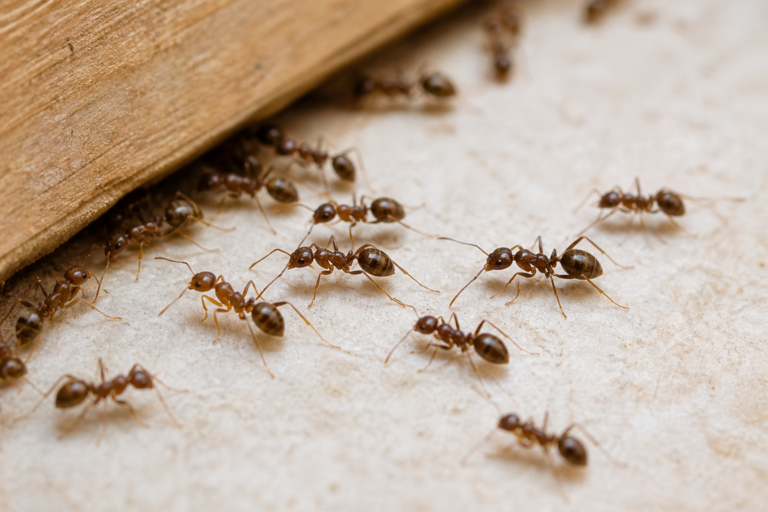
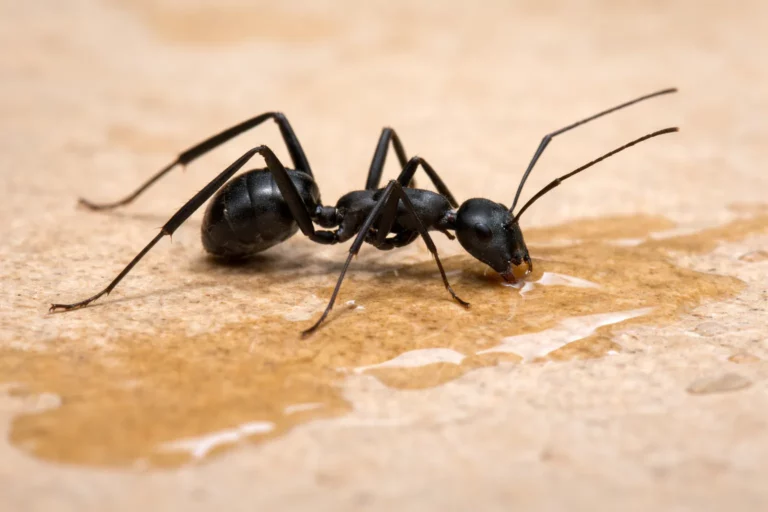
Argentine ants are one of the most persistent and invasive ant species in the world. Originating from South America, they’ve spread rapidly across the southern United States, forming super colonies that contain millions of workers and hundreds of queens.
These small, brown ants are commonly found in gardens, lawns, and kitchens, moving indoors during hot or wet weather. Their ability to eliminate rival species and relocate quickly makes them one of the hardest ants to control without professional help.
What Argentine Ants Look Like
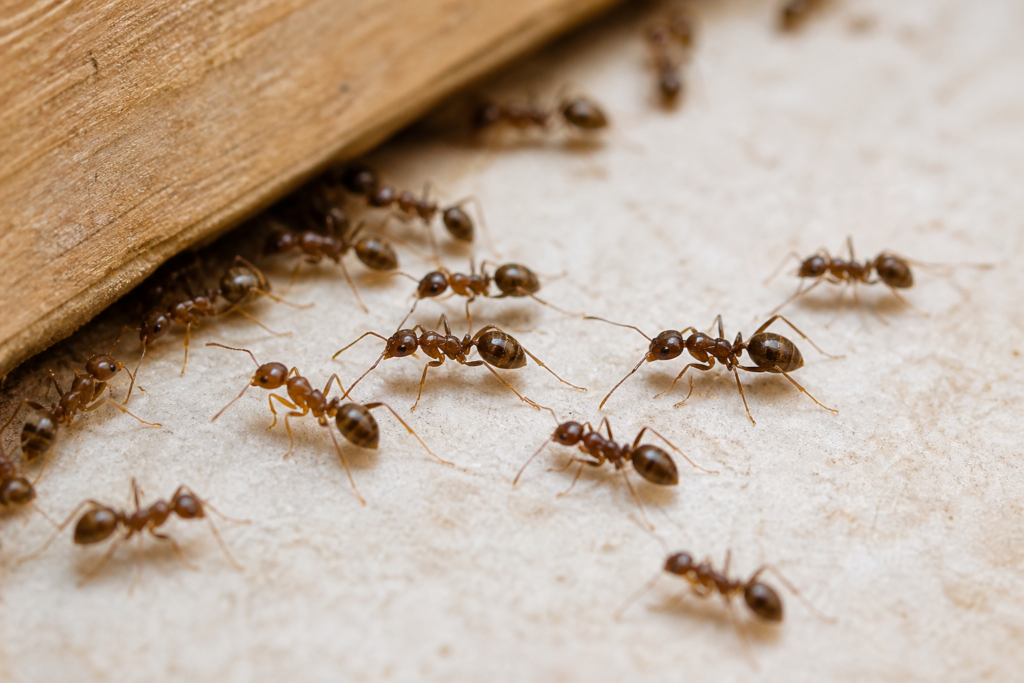
Argentine ants are light to dark brown, about 2.5 to 3 mm long, and lack a stinger. They move in thick, organized trails, often along walls, driveways, or tree trunks.
Identification checklist:
Small, uniform brown color
Ant trails that appear endless and dense
One node between thorax and abdomen (smooth appearance)
Argentine ants form massive interconnected colonies — sometimes stretching across entire neighborhoods. Unlike other ants, they cooperate between nests rather than competing, which allows them to dominate entire properties.
They typically nest:
Beneath mulch, leaf litter, or pavers
Around tree bases or garden beds
Under stones, logs, and planters
Near foundations, patios, or irrigation systems
During hot or rainy weather, they migrate indoors seeking food and shelter.
Signs of a Argentine Ant Infestation
Large numbers of small brown ants moving in continuous trails
Ants entering through cracks, windows, or plumbing
Nesting beneath mulch, stones, or flowerpots
Visible activity near sinks, pet bowls, or bathrooms
Reappearing ants after spraying or cleaning
⚠️ Argentine ants quickly rebuild after store-bought sprays because surviving queens restart new colonies.
Argentine Ant FAQs
Why are Argentine ants so hard to get rid of?
They form massive interconnected colonies with multiple queens. Killing one nest doesn’t affect the others.
Do Argentine ants bite or sting?
They don’t sting, but they can bite when threatened – their main problem is infestation size, not aggression.
Where do Argentine ants come from?
They originated in South America and have spread across the U.S., thriving in warm, humid climates.
Are Argentine ants dangerous?
They don’t transmit diseases but contaminate food and displace native beneficial insects.
Can Argentine ants be eliminated permanently?
Yes – with ongoing baiting and prevention programs designed to target all colonies simultaneously.
Get Your Free Ant Control Quote
Argentine ants build massive colonies that overrun gardens and invade homes in search of sweets and moisture. Our treatments stop them at the source.
Seeing ant activity around your home or business? Our licensed pest control specialists locate nests, eliminate entire colonies, and keep them from coming back. We use safe, targeted treatments that work for any type of ant — indoors or outdoors.
Don’t wait until the infestation spreads — request your free quote today and protect your property year-round.
Why Argentine Ants Are a Problem
Massive populations: Colonies can contain millions of ants.
Eliminate native species: They outcompete other ants and beneficial insects.
Difficult to control: Killing one nest doesn’t solve the problem — others take over.
Food contamination: Trails often lead through pantries and kitchens.
Electrical issues: Nests have been found near circuits, outlets, and appliances.
Professional baiting is the only effective long-term strategy against these super colonies. Contact us Today >>
How to Get Rid of Argentine Ants
What You Can Do First:
Eliminate food and water sources.
Seal cracks and openings around windows and doors.
Keep vegetation trimmed back from the house.
Use slow-acting baits around trails — avoid repellents or sprays.
Professional Treatment:
Argentine ants require colony-wide control, not spot treatment. Our experts use non-repellent bait systems and targeted perimeter barriers that spread through entire colonies – reaching queens and satellite nests.
We also create customized yard and garden defense plans to stop re-entry from surrounding soil or neighboring properties.
Schedule quarterly pest maintenance for recurring protection.
When to Call a Professional
If you notice constant ant trails inside or outside your property — especially after heavy rain — it’s likely an Argentine ant invasion. store-bought sprays only kill surface workers and can cause colonies to spread further.
Our licensed technicians target the root colony, ensuring full elimination and long-term protection.
Trustindex verifies that the original source of the review is Google.
Great service for the price tbh
Alexzay Rodriguez
2025-06-02
Trustindex verifies that the original source of the review is Google.
Goat services and didn’t have a problem ever sense.
Mawite
2025-06-02
Trustindex verifies that the original source of the review is Google.
Best service hands down!! As a first time customer, all I know is this they definitely got the job done and will be recommending them to everyone
shay starz
2025-04-23
Trustindex verifies that the original source of the review is Google.
I been having a bugs everywhere and been terrified and they help me so much getting the bugs away
Jayden Trashbag
2025-04-23
Trustindex verifies that the original source of the review is Google.
Did an amazing job helping me with my ants .
Sade Bennett
2025-04-23
Trustindex verifies that the original source of the review is Google.
I was having problems with my roaches in my house and they did a good job getting rid of em
Tll god
2025-04-23
Trustindex verifies that the original source of the review is Google.
this man does really good he killed all the pests in my house 😮🫡
Suzanne Stewart
2025-04-07
Trustindex verifies that the original source of the review is Google.
Very accommodating for emergency service request. Also prompt in time for appointments. Great company!!
Verified by Trustindex
Trustindex verified badge is the Universal Symbol of Trust. Only the greatest companies can get the verified badge who has a review score above 4.5, based on customer reviews over the past 12 months. Read more
Ant Treatment & Prevention Guides
Explore treatment pages, early warning signs, and prevention guides related to ants. This section updates automatically as new ant-specific treatment pages are added and tagged to the Ants relationship.